
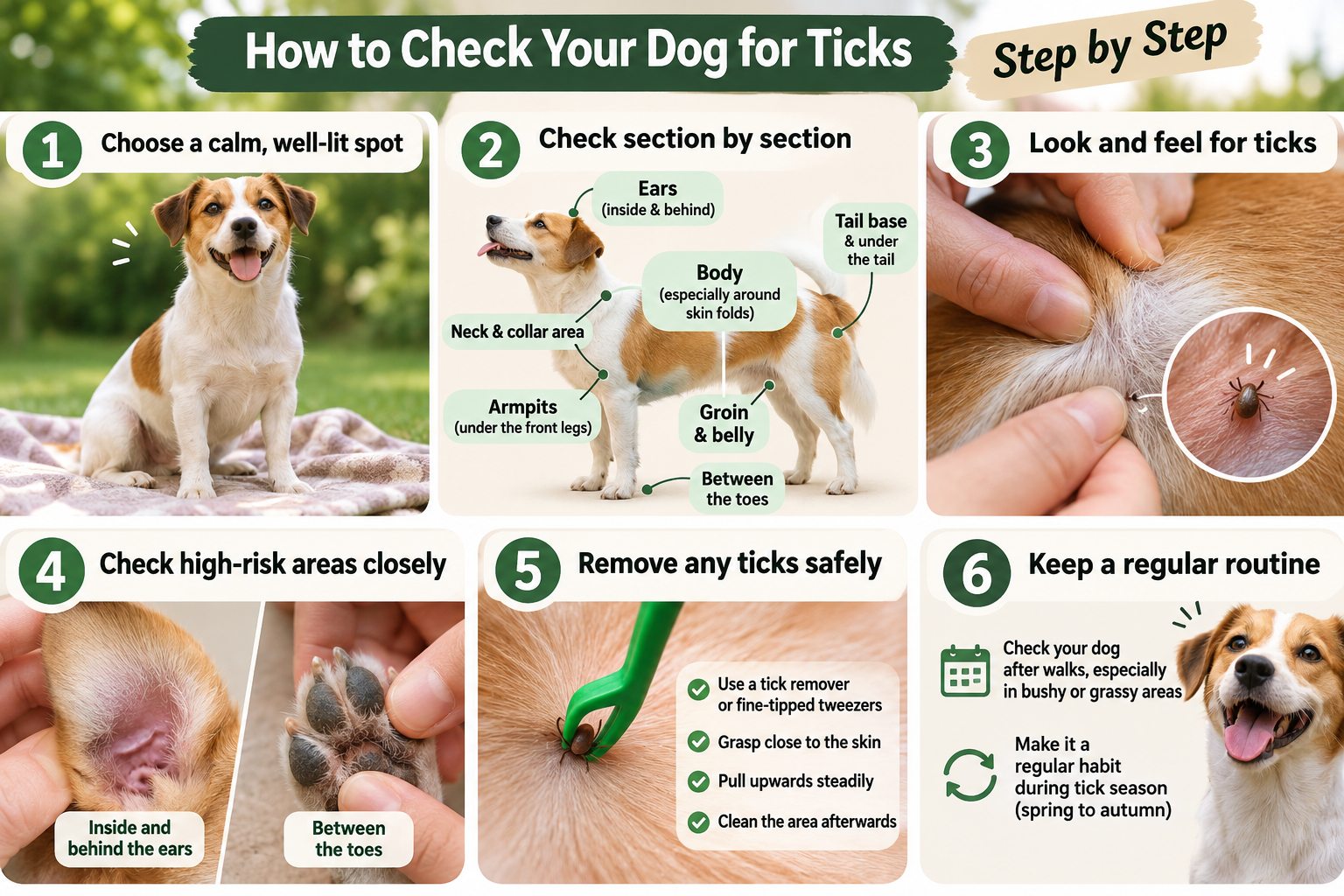
How to Check Your Dog for Ticks After a Walk
A practical, step-by-step guide for Australian dog owners.
Taking your dog for a bushwalk, visiting a coastal park or exploring a new trail is one of the joys of living in Australia. But in many parts of the country, outdoor adventures can also mean exposure to paralysis ticks.
A thorough tick check should become part of your daily routine in tick-risk areas, even if your dog receives regular tick prevention.
Why Tick Checks Matter
Paralysis ticks can cause serious illness in dogs. Early signs may include weakness, unusual walking, vomiting, coughing or changes in your dog's bark.
Ticks can be difficult to see, especially on dogs with thick or long coats. Using your fingertips to feel the skin is often more useful than relying on a quick visual inspection.
Step 1: Start With the Face and Head
Gently examine your dog's face, muzzle, lips, forehead and the areas around the eyes.
Check both sides of the ears, including the ear flaps and accessible folds. Do not insert objects into the ear canal.
Ticks are frequently found around the head and neck, but they can attach anywhere.
Step 2: Remove the Collar and Check the Neck
Remove your dog's collar and carefully feel around the entire neck.
Check beneath the chin, behind the ears and around skin folds.
A tick may feel like a small lump or bump attached to the skin.
Step 3: Check the Front Legs and Chest
Run your fingertips through the coat and down to the skin.
Check the shoulders, chest, armpits, front legs, paws and between the toes.
Step 4: Examine the Body and Belly
Work systematically along the back, sides, abdomen and groin.
Part the fur where necessary so you can see and feel the skin.
Don't rush through areas with thick hair.
Step 5: Check the Back Legs and Tail
Examine both hind legs, the paws and between the toes.
Finish by checking around the tail and beneath it, including the surrounding skin.
What If You Find a Tick?
If you find an attached tick, arrange prompt veterinary advice. Remove it promptly using an appropriate tick-removal tool or fine-tipped tweezers, avoiding squeezing its body. Your veterinarian can demonstrate the correct technique.
Continue checking for additional ticks.
If your dog is weak, unsteady, vomiting, coughing, breathing abnormally or otherwise unwell, seek emergency veterinary care immediately. Do not wait until you have located every tick.
Make It a Daily Habit
After a walk, give your dog a careful check. In tick-risk areas, also carry out a thorough full-body search at least once daily.
Regular prevention and checking work together. Neither should replace the other.
A few extra minutes of attention can help you notice a problem before it becomes more serious.
References
- [RSPCA Australia — How can I protect my dog or cat from tick paralysis?](https://kb.rspca.org.au/categories/companion-animals/dogs/caring-for-my-dog/how-can-i-protect-my-dog-or-cat-from-tick-paralysis)
- [University of Sydney — Dogs and ticks](https://www.sydney.edu.au/vet-hospital/small-animals/dogs/preventative-health/parasites/ticks.html)
This guide provides general educational information and does not replace veterinary advice. Suspected tick paralysis requires urgent veterinary assessment.