
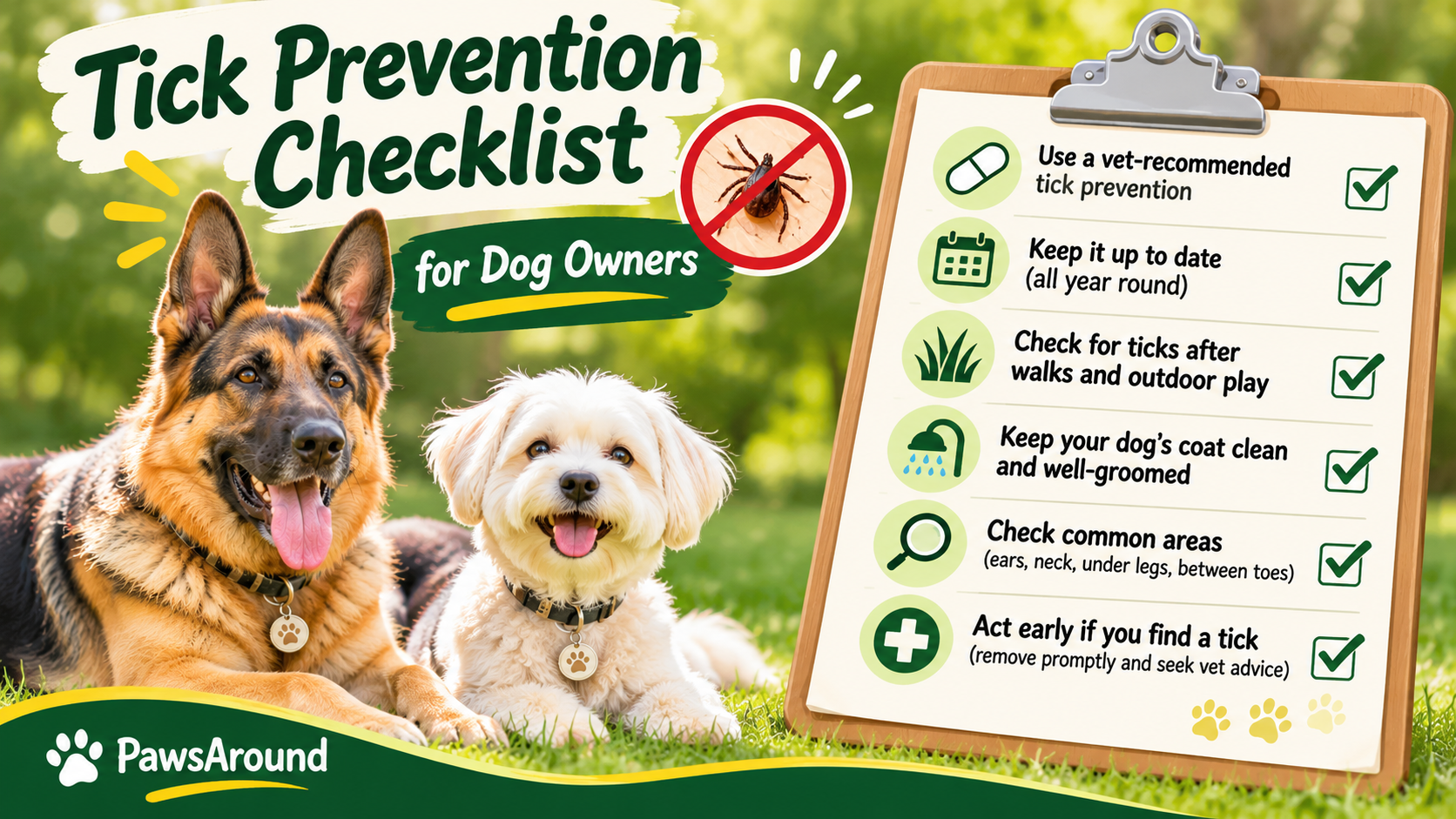
Tick Prevention Checklist for Dog Owners
A practical checklist for everyday life, bushwalks and dog-friendly adventures in Australia.
Paralysis ticks are a serious concern for dogs in many parts of eastern Australia.
Fortunately, there are practical steps owners can take to reduce the risk.
Use this checklist to review your dog's prevention routine before your next adventure.
Before You Leave Home
- [ ] Check that your dog's tick prevention is appropriate and up to date.
- [ ] Confirm that the product specifically covers Australian paralysis ticks.
- [ ] Follow the product's current Australian label and dosing schedule.
- [ ] Check the weather and conditions at your destination.
- [ ] Consider whether the route includes dense bushland, scrub or long grass.
- [ ] Know how to contact a nearby veterinary hospital in an emergency.
If you're unsure whether your dog's prevention is suitable, ask your veterinarian before travelling.
During Your Walk
- [ ] Keep your dog on permitted paths where practical.
- [ ] Avoid unnecessary contact with dense vegetation in tick-risk areas.
- [ ] Follow local dog access and leash rules.
- [ ] Watch for unusual weakness, walking changes or other signs of illness.
Tick prevention is important even for short outings.
After Your Adventure
- [ ] Examine the face, muzzle and around the eyes.
- [ ] Check both ears and behind them.
- [ ] Remove the collar and examine the neck.
- [ ] Check the chest, shoulders and armpits.
- [ ] Feel through the coat along the back and sides.
- [ ] Check the belly and groin.
- [ ] Examine all four legs, paws and between the toes.
- [ ] Check around and beneath the tail.
Use your fingertips to feel down to the skin. A tick can be difficult to see, especially beneath thick fur.
In tick-risk areas, complete a thorough full-body check at least once every day, even when using prevention products.
Know the Warning Signs
Seek urgent veterinary advice if your dog develops concerning symptoms such as:
- Weakness or wobbliness, especially in the hind legs
- Difficulty standing or walking normally
- Vomiting, retching or coughing
- A change in bark or voice
- Breathing difficulties
- Unusual behaviour or rapid deterioration
A tick may be difficult to find. Do not delay veterinary assessment while searching for one.
If You Find an Attached Tick
Arrange prompt veterinary advice.
Remove the tick promptly using an appropriate removal tool or fine-tipped tweezers, taking care not to squeeze its body. Continue checking for additional ticks.
If your dog shows signs of illness, seek emergency veterinary care immediately.
Keep your dog calm and minimise unnecessary activity while arranging care. If tick paralysis is suspected, do not offer food or water unless the treating veterinarian advises otherwise; ask before giving oral medication.
Review Your Prevention Routine
Set a reminder to check when your dog's next prevention treatment is due.
Review the plan with your veterinarian if your dog:
- Changes weight or develops a medical condition
- Starts taking additional medication
- Travels to a new tick-risk region
- Misses a scheduled prevention treatment
A Small Routine That Matters
Daily checks may feel repetitive, especially when your dog seems perfectly healthy.
But they are part of caring for a dog that enjoys the outdoors.
Prevention, careful checking and early veterinary attention are all important parts of tick safety.
References
- [RSPCA Australia — How to protect your pet from tick paralysis](https://kb.rspca.org.au/categories/companion-animals/dogs/caring-for-my-dog/how-can-i-protect-my-dog-or-cat-from-tick-paralysis)
- [University of Sydney — Dogs and ticks](https://www.sydney.edu.au/vet-hospital/small-animals/dogs/preventative-health/parasites/ticks.html)
- [2024 Australian Paralysis Tick Advisory Panel Guidelines](https://www.vetapedia.com.au/wp-content/uploads/2024/08/2024_Guidelines_Tick_Paralysis.pdf)
General educational information only. Follow veterinary advice and current product labels. Suspected tick paralysis is an emergency.